Not disclose hsv2? How to handle it
Last update:
Herpes simplex virus type 2 (HSV-2) is a prevalent and persistent sexually transmitted infection (STI) affecting millions of people worldwide. The responsibility of disclosing an HSV-2 diagnosis to sexual partners is not only a matter of ethics but also a crucial step in preventing the transmission of the virus.

However, individuals may find themselves in situations where they have not disclosed their HSV-2 status, whether intentionally or inadvertently.
Not disclose hsv2? How to handle it? We will explore the reasons behind non-disclosure, the potential consequences, and the steps to handle the failed to discloser situation responsibly.
How likely is it for a partner to get HSV2? The typical transmission rate
How easy is it for a woman to pass HSV2 to a partner? You may know the typical transmission rate. The typical transmission rate from an individual with hsv2 to their consistent partner is approximately 10 percent annually. However, this annual transmission rate increases when the infected partner is male. Unfortunately, the female partner faces a 20 percent likelihood of infection.
Worry about transmission? Meet singles with herpes
PositiveSingles is 2023 No.1 Herpes dating site and have been on the web for over 20 years. It has 1.7 million online people with herpes.
You can find thousands of nearby singles wiht herpes like you no matter you are looking for a casual relationship or long-term parters. Spend 3 minutes to place a profile and meet nearby singles with herpes.
What happens if you don't disclose hsv2
Not disclosing hsv2 to a sexual partner can have serious legal, ethical, and health consequences.
- Legal Consequences: In many jurisdictions, knowingly transmitting an STI to a sexual partner without their informed consent can be a criminal offense. Laws vary from place to place, but individuals who do not disclose their herpes infection can face legal consequences, including fines and imprisonment.
- Ethical Considerations: Not disclosing an STI to a sexual partner is considered unethical and a breach of trust. Honesty and open communication about one's sexual health are essential for maintaining healthy relationships.
- Health Risks: Herpes can be transmitted even when there are no visible symptoms (asymptomatic shedding). By not disclosing the infection, you put your sexual partner at risk of contracting herpes without their knowledge. This can lead to health complications and discomfort for them.
- Emotional Consequences: Discovering that you have contracted herpes from a partner who did not disclose their infection can be emotionally distressing. It can damage trust and lead to feelings of betrayal and anger.
It's essential to prioritize open and honest communication about sexual health with your partners. If you have herpes, it's crucial to inform potential sexual partners before engaging in sexual activities.
How do you disclose herpes after you've slept with them?
Disclosing a herpes to a sexual partner after you've already slept with them can be challenging, but it's essential to be honest and upfront about your condition to maintain trust and protect their health.
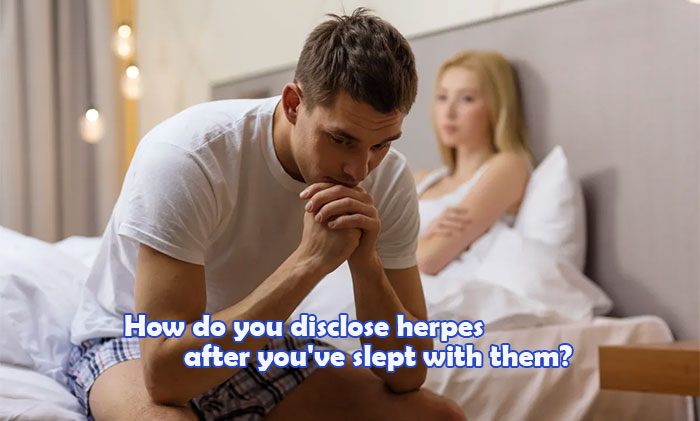
How do you disclose herpes after you've slept with them? Here are some steps to consider when disclosing herpes after sexual activity has occurred:
- Choose the Right Time and Place: Find a private, comfortable, and quiet setting where you can have an open and honest conversation without distractions or interruptions.
- Be Prepared: Before you initiate the conversation, make sure you are well-informed about herpes. Understand the basics of the infection, including how it is transmitted, potential symptoms, and the steps you've taken to manage it.
- Stay Calm and Composed: Approach the conversation with a calm and confident demeanor. Your partner may have concerns or questions, so it's important to remain composed and ready to provide information.
- Be Honest and Direct: Begin the conversation by expressing your regret for not disclosing your herpes status earlier. Then, be clear and direct about your herpes diagnosis. You might say something like, "I need to talk to you about something important. I have herpes, and I should have told you before we had sex."
- Provide Information: Offer information about herpes, including how it can be transmitted, what types of symptoms are common, and the steps you are taking to manage the infection. Emphasize that you take your partner's health seriously and want to ensure their well-being.
- Answer Questions: Be prepared to answer any questions or concerns your partner may have. Be patient and provide honest, accurate information to address their worries.
- Offer Support: Let your partner know that you are there to support them and that you are committed to taking steps to minimize the risk of transmission, such as using condoms and antiviral medications.
- Respect Their Decision: Understand that your partner may need time to process the information and make decisions about their own sexual health. Respect their choices, whether they choose to continue the relationship, take precautions, or end the sexual aspect of the relationship.
- Follow Safe Practices: If your partner chooses to continue the relationship, follow safe sexual practices to reduce the risk of transmission. This may include using condoms, taking antiviral medications as prescribed, and avoiding sexual activity during outbreaks.
Remember that honesty and open communication are key in situations if you have herpes and failed to disclose it after you've slept with them. While the conversation may be difficult, disclosing your herpes status is the responsible and ethical thing to do to protect your partner's health and maintain trust in your relationship.
If you're feeling nervous, anxious, or emotionally charged about disclosing, conveying your message in writing can provide a sense of control and reduce overall stress.
2023 Best Herpes Dating Site
PositiveSingles is the largest site among all the popular herpes dating sites. It has 1.9 millions online users. It is easy for you find nearby people with herpes around you. It's totally free to place a profile for a free trial membership.
Not disclose hsv2 after you've slept with a partner? How to Disclose Herpes in Written Form
Text messaging may seem like the simplest method for disclosure, but it's essential to note that the casual nature of texting may not convey the sensitivity or gravity that you hope to convey in such a vulnerable situation. Alternatively, composing an email or even a handwritten note, card, or letter can be a powerful way to disclose your herpes status with mindfulness and intention.
There are tangible benefits to choosing a written disclosure. It grants you full control over the content and delivery of your message. You can carefully craft the words that resonate with you, and you even have the option to utilize spell check and grammar check tools for precision.
Here's a step-by-step guide on how to disclose herpes in writing:
- Choose the Right Medium: Decide whether you want to disclose herpes through email, text message, or a handwritten letter. Each has its advantages, but it's essential to choose a medium that you and your partner are comfortable with.
- Express Regret: Acknowledge that you should have disclosed your herpes status earlier and express your regret for not doing so. This shows that you understand the importance of honesty.
- Be Direct and Clear: In a straightforward manner, disclose your herpes diagnosis. For example, "I want to let you know that I have herpes HSV-2."
- Provide Information: Offer essential information about herpes, such as how it is transmitted, potential symptoms, and any steps you are taking to manage the infection. Mention that herpes can be managed with antiviral medications and safe sexual practices.
- Share Your Feelings: Express your concern for your partner's well-being and health. Make it clear that you take their health seriously.
- Offer Support: Let your partner know that you are available to discuss any questions or concerns they may have and that you are committed to taking steps to minimize the risk of transmission.
- Respect Their Decision: Understand that your partner may need time to process the information and decide how they want to proceed. Reiterate that you respect their choices and will support them regardless of their decision.
- End on a Positive Note: Close your message on a positive and empathetic note. For example, "I care about you and our relationship, and I hope we can have an open and honest conversation about this."
- Proofread and Send: Review your message for clarity and accuracy, and ensure it conveys your message with sensitivity. Once you are satisfied, send the message via your chosen medium.
Remember that disclosing herpes is a sensitive and potentially challenging conversation. Writing a thoughtful and empathetic message can help ensure that your partner receives the information they need to make informed decisions about their own sexual health.

2023 Best herpes dating websites
There are more than 20+ online herpes dating sites. We have tested all of them, and pick the best herpes dating sites for you. including feature lists, costs and member base.

Read these herpes success stories from real people with herpes.
|
The keys to a fulfilling sex life with herpes
You can still have a fulfilling sex life with herpes, it may be more complicated than before. Now, you must be careful about what you do and when you do it. |
|
How to tell someone you have herpes
Tips on handling the conversation. Being comfortable with yourself first and then presenting your information in a calm, reassuring way. what contents, sample script, how will a partner react? |
|
Living With Herpes-The Best Guide
Having herpes doesn’t have to be a big deal. Do some research and learn all you can about the disease. Empowering yourself with knowledge can help you a lot. |
|
How to handle dating
The secret behind 20+ herpes dating sites How to succeed at a herpes dating site Free herpes dating sites vs Paid herpes dating sites Can Herpes Dating Sites Work for You? The Do's and Don'ts of Online Herpes Dating |